1934 Americas Cup
The Challenge
The 1934 challenge was to be quite a story with the Challenger in spite of a strike by her crew just 8 days before departing for America almost lifting the Cup and the titanic struggle between two boats and two cities to defend the cup.
In September 1933 the New York Yacht Club received a new challenge from T.O.M Sopwith one of a new bread of yachtsman in England. Sopwith and experienced 12m sailor had bought Shamrock V in 1931 after the death of Sir Thomas Lipton and had raced her successfully in the British big class circuit of 1932 and 1933.
Sopwith was a prominent Airplane manufacturer who brought his huge recourses and knowledge of aerodynamics and airframe construction to the challenge. For a designer he chose Charles Nicholson the only man to have designed and built two Js. Nicholson had learnt a lot from designing Shamrock V then Velsheda for Bill Stephenson the chairman of Woolworth in 1933. For Sopwith he produced Endeavour.
To meet the challenge only Weetamoe of the Js built in 1930 had been kept racing and the older Vanitie. The Depression had hit American hard and most of the wealthy yachtsman raced the smaller M class and 12m yachts.. Of the old boats Whirlwind had proved a failure, Yankee was considered unsuited to the light conditions expected and Enterprise due to changes in Universal Rule was considered too small.
Harold Vanderbilt who had skippered the successful Defender offered to form a syndicate to build a new boat to meet Sopwith’s challenge. Accordingly, Starling Burgess was again commissioned to design a new J. Though late starting Vanderbilt was lucky in that Burgess had already designed a new J as the result of an expectation that Sir Thomas Lipton prior to his death in 1931 was about to make a new challenge. This design he used with modifications and became Rainbow which was built in the record time of 100 days by the Herreshoff manufacturing Company.
A Boston syndicate was formed in the winter of 1933-34 to modify Yankee with the intention of making a second bid to defend the America’s Cup. These modifications proved very successful and made her a very serious challenger to Rainbow.
Changes to the Universal rule had been made in 1931 and influenced the yachts of 1934. A minimum mast weight was set to stop the use of light weak spars. No running or standing rigging was to be set up or worked below the deck except forestays. The hight of the forestay was fixed and normal cabin fittings where made obligatory and the weight fixed . The idea of these restrictions was to promote a wholesome yacht that could have a wider use after racing.
( for full details see Ian Dears Enterprise to Endeavour)
During the early races particularly at the Observation races Yankee administered a series of defeats on Rainbow becoming the clear favourite to defend the Cup. After a poor start to the New York Yacht Club Cruise Vanderbilt had more ballast added to Rainbow which improved her stability and improved her sail carrying ability. With these changes Rainbow finally defeated Yankee at both the Kings and Astor Cups.
With both boats now equal in the eyes of the selection committee the Selection trials proved very memorable with Rainbow winning the final race by just 1 second and was selected to defend the cup amongst some criticism from the Boston camp.
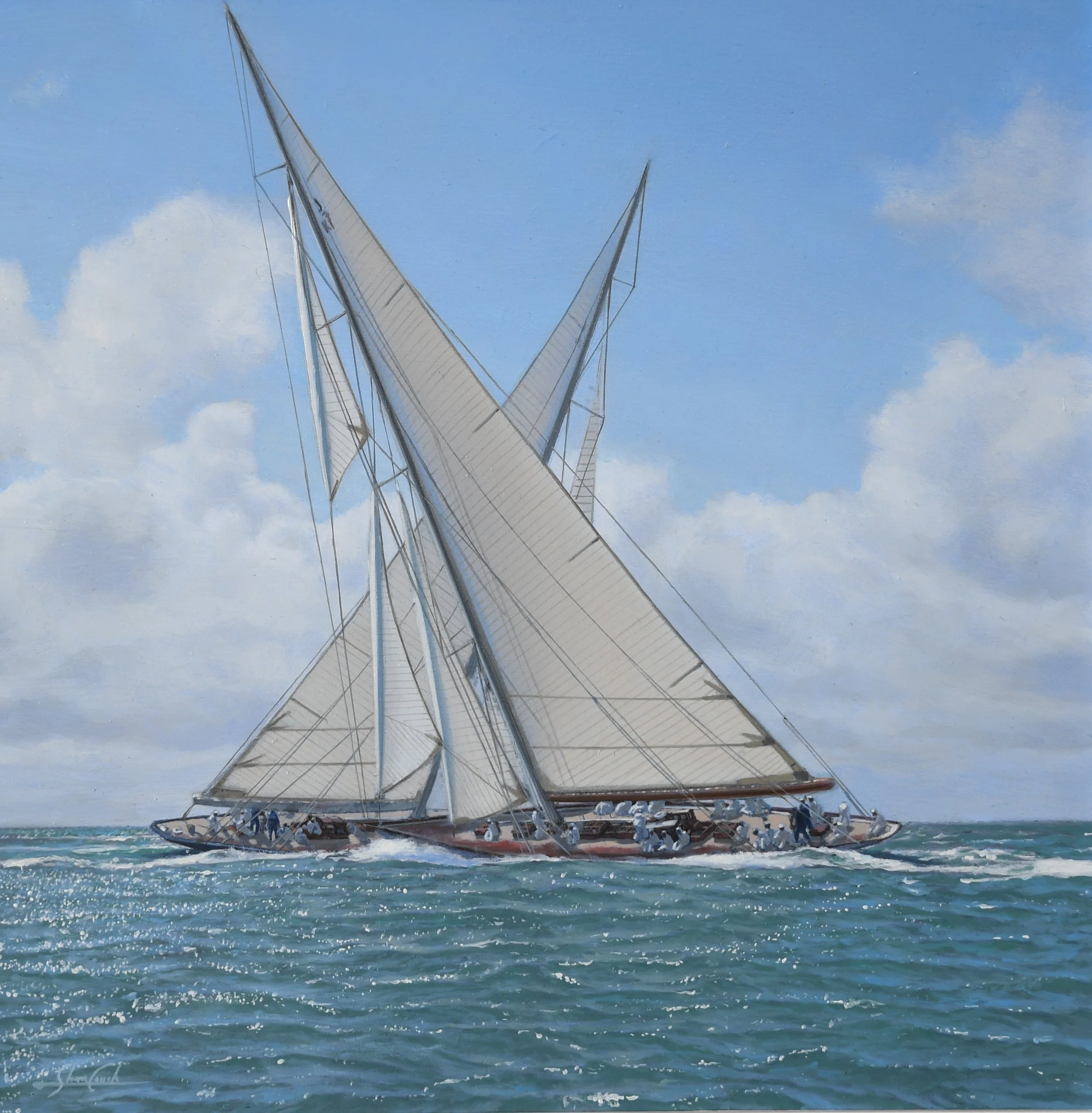
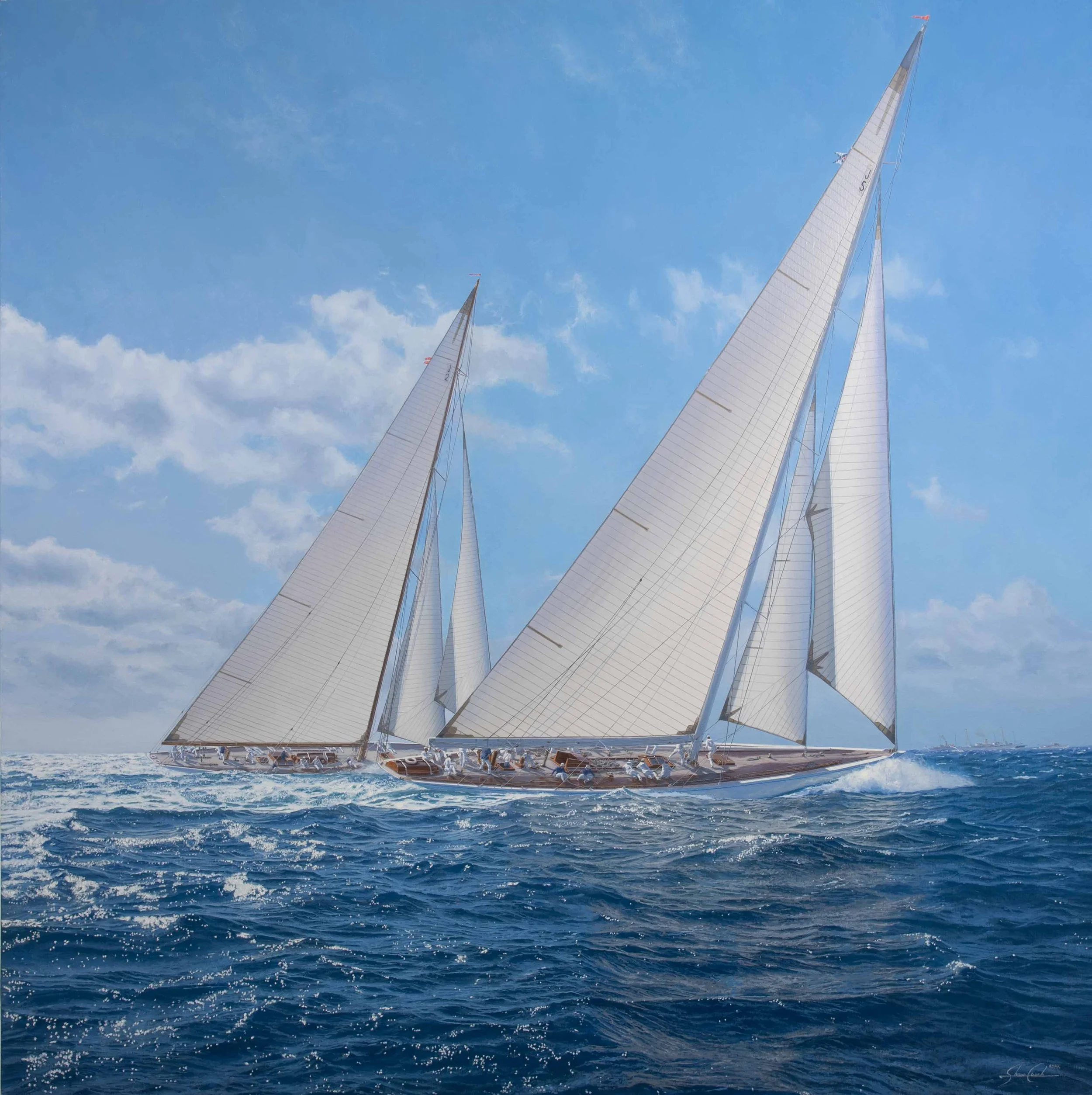
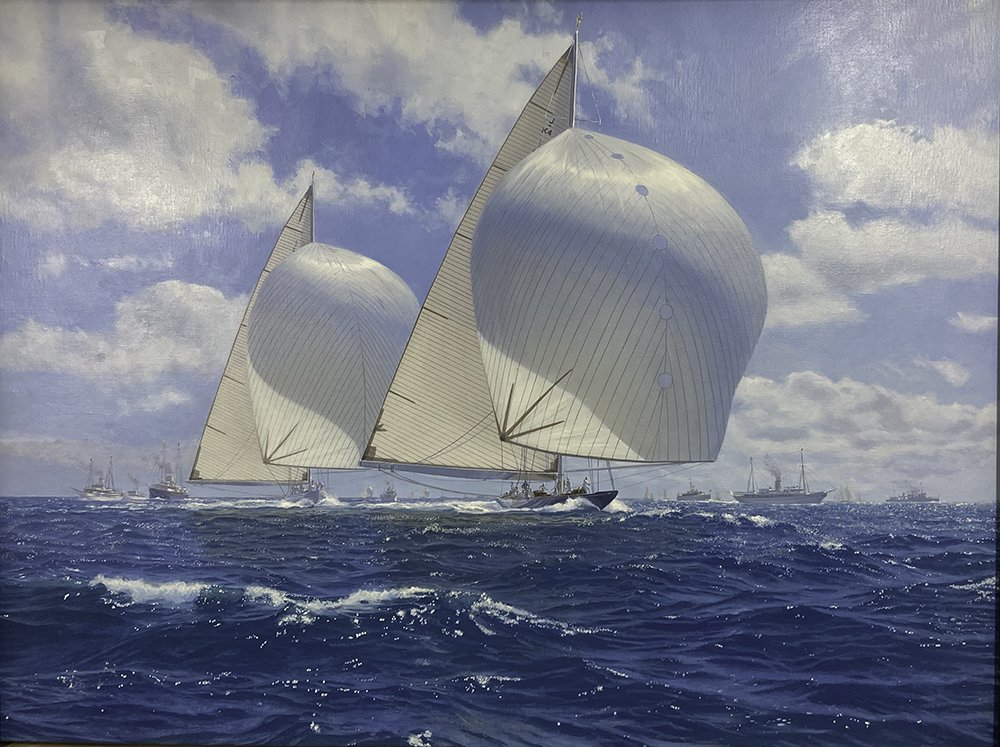
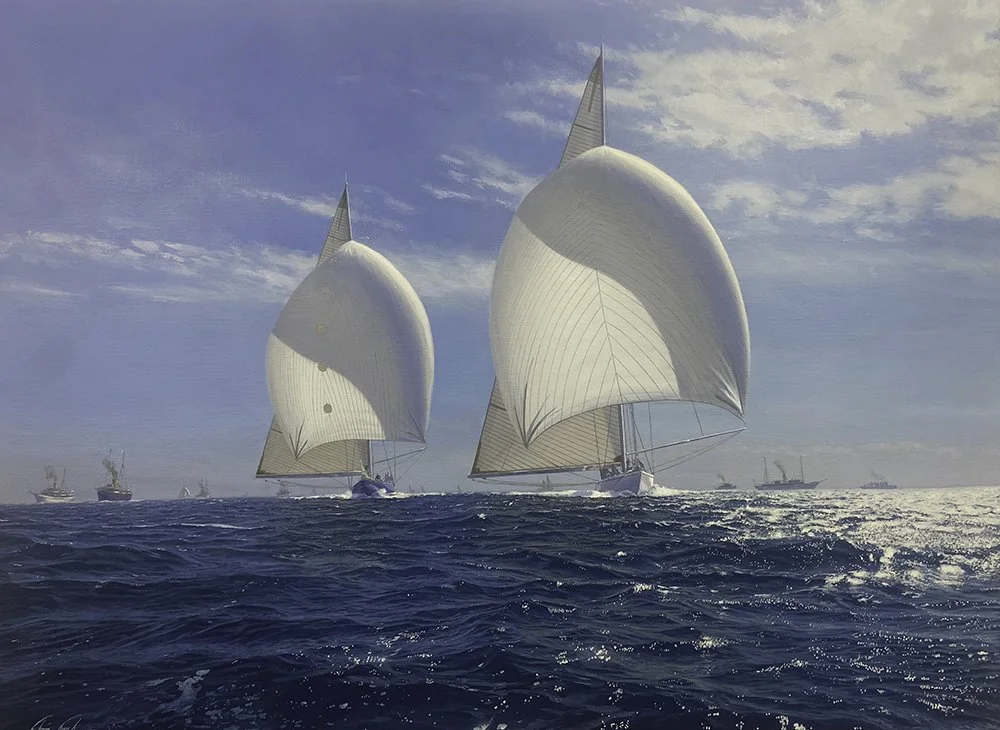
The Americas Cup races of 1934 were to prove one of the most memorable and controversial contests of the cup’s long history, Remarkably Endeavour went 2.0 up proving herself the faster boat.
She was well ahead in the final leg of the third race when controversially she sailed away from the finish in what was to be a failed attempt to cover the trailing Rainbow a manoeuvre that cost her the third race. The Fourth race was marred by disputes which today are still hotly disputed when Harold Vanderbilt allegedly failed to give way to a luffing Endeavour which lost her a favourable position in avoiding a collision. This squared the series 2.2. In race 5 a demotivated Endeavour was heavily defeated putting the score 3.2 in Rainbow’s favour.
In the final and concluding race of the contest protest flags were again flown and poor tactical decisions again cost Endeavour the race and the Cup.
Throughout the 1934 America’s Cup poor tactical decisions and slow sail changing performance proved the deciding factors resulting in a faster challenger going home without the cup.
Unfortunately, the various disputes surrounding the races of the 1934 Cup resulted in Sopwith stating he would not be returning to challenge for the America’s Cup again.
Paintings of the 1934 America’s Cup